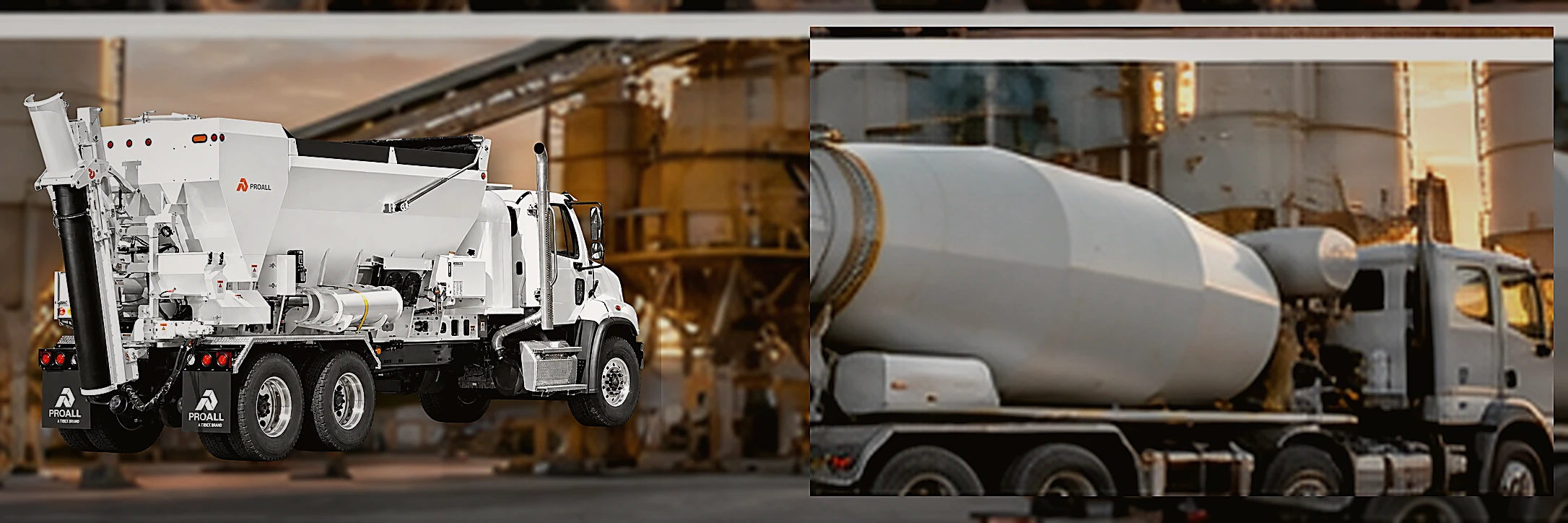
A volumetric mixer and a traditional drum mixer can both deliver fresh concrete, but they arrive at the jobsite through different production systems. Understanding that difference is more important than comparing the trucks by appearance.
The basic difference
A volumetric mixer carries cementitious materials, aggregate, water and admixtures in separate compartments and proportions and mixes concrete as it is produced at the jobsite. VMMB describes these units as continuous volumetric mixers and the industry uses ASTM C685 as a core specification reference.
A conventional ready-mix truck receives batched concrete or raw ingredients from a concrete plant and uses a rotating drum to mix or agitate the load during delivery. NRMCA describes truck-mixed, shrink-mixed and central-mixed production workflows.
When volumetric mixing can fit well
Volumetric equipment can be attractive when jobs require variable quantities, specialty mixes, remote production or the ability to start and stop production at the point of placement. Because ingredients remain separate until production, the operating model is different from hauling one pre-batched drum load.
When drum mixers fit well
Traditional mixer trucks work naturally with established ready-mix plants that batch repeatable loads into a fleet and dispatch trucks to multiple jobs. For producers built around centralized batching, the drum truck is part of a larger plant-and-delivery system.
Production planning
With a drum fleet, plant capacity, truck cycle time, traffic and jobsite unloading determine delivery rhythm. With volumetric mixers, onboard material capacity, calibration, refilling logistics and onsite production pace become central planning factors.
Mix flexibility
Volumetric mixers can change production by adjusting material proportions within the machine's approved process and calibration limits. Drum mixers normally deliver the batch that was loaded at the plant. Both systems require disciplined quality control and accurate material measurement.
Maintenance is different
A drum truck concentrates wear in the drum, drive, rollers, chutes and truck chassis. A volumetric mixer adds separate aggregate bins, metering components, belts or augers, cement handling and a continuous mixing system. Buyers should inspect the components that are unique to the production method.
Operator skill and calibration matter
Neither system is simply “load and go.” VMMB emphasizes operator knowledge and standards for volumetric equipment, while ready-mix operations depend on plant batching, truck operation and concrete-quality procedures.
| Operating need | Potential fit |
|---|---|
| Central ready-mix plant dispatch | Drum mixer |
| Repeatable fleet delivery cycles | Drum mixer |
| Variable quantity at point of placement | Volumetric mixer |
| Onsite continuous production | Volumetric mixer |
| Multiple mix requirements from one mobile unit | Volumetric mixer, subject to calibration and materials |
The takeaway
Choose the production system that fits how you sell, batch and place concrete. A volumetric mixer changes where batching and mixing happen; a drum mixer is part of a plant-centered delivery model. Compare workflow, quality control, material logistics, maintenance and expected utilization before comparing truck prices.
Related BigEquipCo guides: Concrete Batch Plant Cost and Portable vs. Stationary Batch Plants.