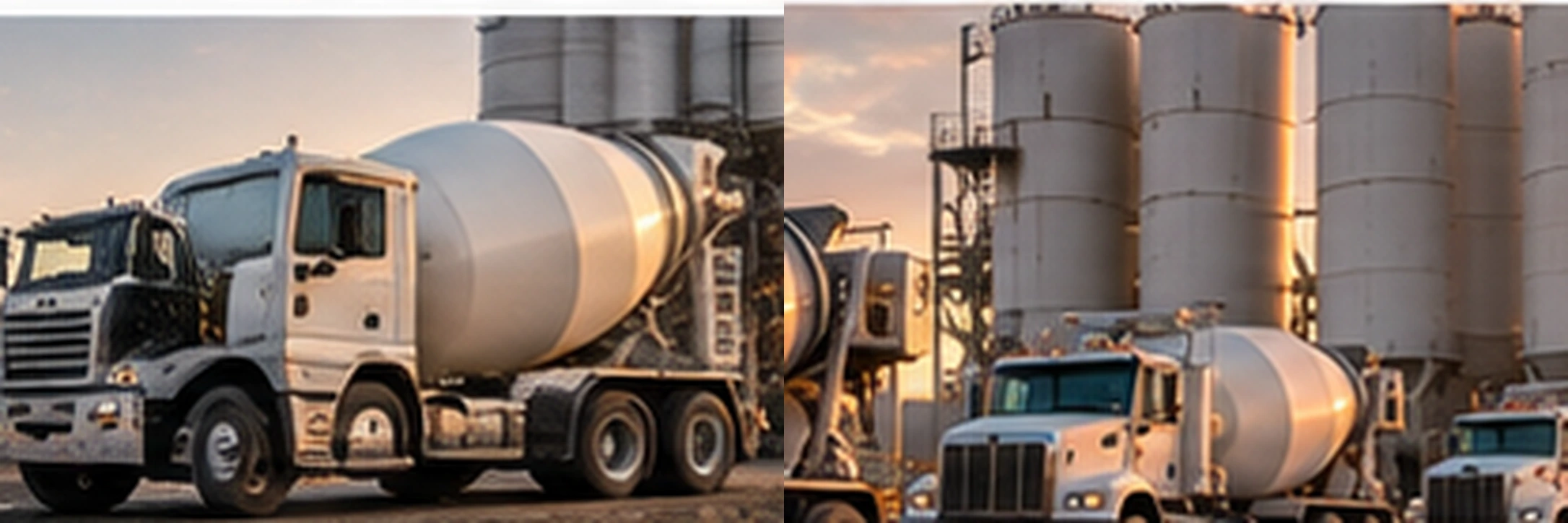
Front- and rear-discharge mixer trucks deliver the same perishable product, but they organize the driver, chute and jobsite workflow differently. The choice can affect maneuvering, staffing, plant compatibility, driver training and fleet standardization. Compare the routes and placements your trucks actually handle instead of assuming one design is universally better.
1. Discharge location changes the workflow
Traditional rear-discharge mixers place the chute at the back of the truck. Front-discharge mixers place the discharge system ahead of the driver. NRMCA notes that front-discharge designs allow the driver to position the chute mechanically from the cab, while rear-discharge trucks use the traditional rear placement arrangement.
2. Front discharge can give the driver more placement control
Advance describes front-discharge trucks as allowing the driver to navigate the site and discharge from the cab. That can be useful where the truck needs to approach placement areas directly and make frequent positioning adjustments. Evaluate visibility, controls and how customers normally stage trucks.
3. Rear discharge remains a familiar fleet format
Rear-discharge mixers are common across ready-mix fleets. Existing shops may already be standardized around their parts, training, loading height, washout practices and procedures. A new truck type should be considered in the context of that installed fleet infrastructure.
4. Plant compatibility matters
Charge height, lane clearance and truck positioning can affect whether a mixer fits an existing batch plant without modification. Some front-discharge models are designed around loading heights associated with rear-discharge fleets, but buyers should confirm dimensions for the exact truck and plant.
5. Axle configuration affects legal payload
Mixer capacity is only part of payload. Axle count, bridge laws, wheelbase, state rules and truck tare weight all affect how much concrete can be carried legally. Compare certified weight information and rules for the actual operating territory.
6. Maneuverability is a job-by-job question
| Fleet question | What to evaluate |
|---|---|
| Urban work | Turning radius, length, visibility and lane access |
| Residential pours | Approach, chute reach and driver control |
| Commercial sites | Truck staging, backing and placement sequence |
| Rural or off-road | Drive configuration, clearance, traction and axle layout |
7. Maintenance and parts standardization matter
Compare drum, rollers or bearings, hydraulics, chute components, controls, axles, steering, brakes and service support. Mixed fleets can add flexibility, but they also expand the parts and training inventory a shop must support.
8. Driver training belongs in the purchase plan
Build training around backing, chute movement, access, washout, drum control, communication with the pour crew and pre-trip inspection. A strong configuration is only productive when the driver can operate it safely and consistently.
9. Inspect a used mixer as a complete truck
Inspect chassis, steering, brakes, suspension, tires, frame, drum, fins, drive system, water system, chutes, controls and service records. Concrete buildup can hide wear, and mixer condition can be expensive to correct even when the chassis looks strong.
The takeaway
Front discharge can offer driver-controlled placement and strong jobsite maneuverability. Rear discharge offers a familiar, widely used fleet format. Compare both against plant height, route mix, legal payload, maintenance capability and customer workflow.
Related BigEquipCo guides: Used Concrete Mixer Truck Buying Guide, Volumetric Mixer vs. Drum Mixer and Used Concrete Batch Plant Buying Guide.