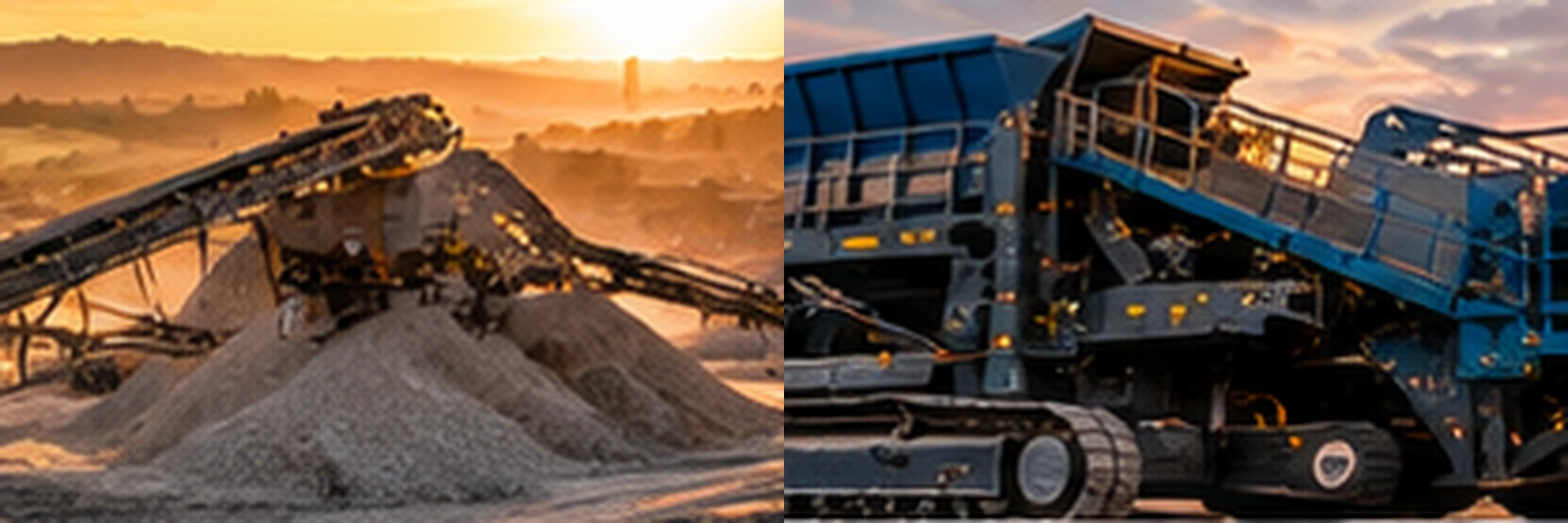
Jaw crushers and cone crushers often work in the same aggregate plant, but they solve different parts of the size-reduction process. A jaw is commonly selected for primary reduction and large feed, while a cone is commonly used after primary crushing when the operation needs additional reduction and tighter product control. The right choice starts with the material and process stage, not with a simple question of which crusher is better.
1. Start with the crushing stage
Jaw crushers are widely used as primary crushers because their feed openings can accept relatively large rock and demolition material. Metso describes its C Series jaw crushers as machines mainly used in primary crushing for aggregates, mining and recycling. Cone crushers are commonly applied in secondary, tertiary and quaternary stages, where the feed has already been reduced.
2. Compare the feed before comparing machines
Record maximum feed size, gradation, moisture, clay content, abrasiveness and any steel or tramp material. A crusher matched to clean blasted rock may behave very differently on reinforced demolition material or sticky feed. Feed opening, chamber geometry and upstream scalping should be evaluated together.
3. Jaw crushers favor large, irregular feed
A jaw reduces material between a fixed and moving jaw. That geometry makes it effective for coarse primary reduction, including mobile plants that receive material directly from an excavator or loader and feed a downstream screen or secondary crusher.
4. Cone crushers favor controlled secondary reduction
Cone crushers compress material between a moving mantle and concave surfaces. They are often selected when a process needs more reduction after the primary stage, especially in hard rock. Performance depends on consistent feed, correct chamber selection, closed-side setting and keeping the chamber appropriately loaded.
5. Finished product matters
If an operation needs one coarse product, a jaw may work with screening as the main reduction stage. If the plant needs tighter gradation or multiple finished products, a jaw-plus-cone circuit may make more sense. Screen capacity, recirculation and final product specifications belong in the crusher decision.
6. Compare the whole circuit
| Question | Jaw crusher | Cone crusher |
|---|---|---|
| Typical role | Primary crushing | Secondary or tertiary reduction |
| Feed | Larger coarse feed | Pre-crushed feed |
| Plant position | Front of circuit | After primary crusher |
| Main decision driver | Feed acceptance and primary reduction | Reduction, gradation and product control |
7. Wear cost depends on the material
Hardness and abrasiveness affect wear in both crusher types. Compare expected wear-part life, replacement labor, service access, liner or jaw-die availability and downtime. A low purchase price can be a poor value if the chamber or wear package is wrong for the feed.
8. Mobility can change the answer
Track-mounted and portable jaw and cone plants can both support mobile operations. If a contractor moves frequently, transport dimensions, setup time, power arrangement, conveyor configuration and compatibility with existing screens can matter as much as crusher type.
9. Match the crusher to measured production goals
Before buying, document tons per hour, maximum feed, target products, recirculating load, power availability and downstream screen capacity. Ask for the exact chamber, wear configuration and recent production history where available. A used crusher should be evaluated as part of a process, not as an isolated machine.
The takeaway
Choose a jaw crusher when the primary problem is accepting and reducing coarse feed. Choose a cone crusher when the process needs additional reduction and product control after primary crushing. Many productive plants use both because the machines perform different jobs in the same circuit.
Related BigEquipCo guides: Jaw Crusher vs. Impact Crusher, Used Crusher Buying Guide and Used Screening Plant Buying Guide.