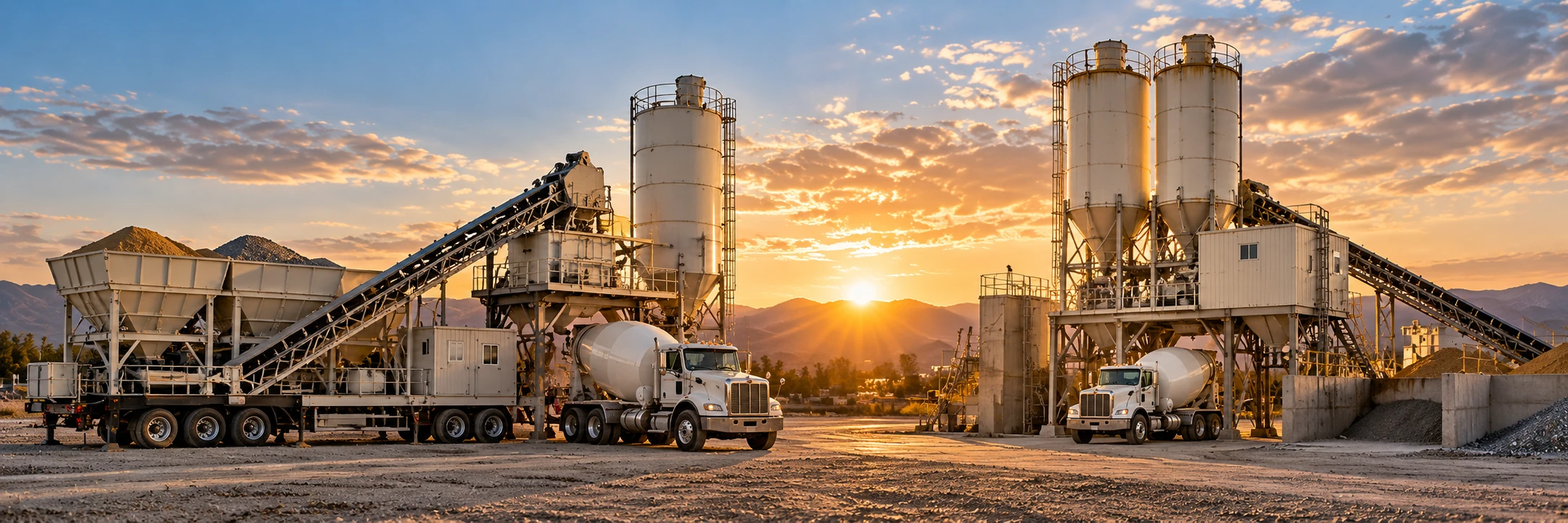
Concrete batch plants need a reliable way to move weighed aggregate from storage to the mixer or truck-loading point. Two common architectures are the skip hoist and the inclined belt conveyor. Both can work well, but they shape the plant differently.
What a skip hoist does
A skip system moves a batch of weighed aggregate in a bucket or skip along a rail to the mixer. SIMEM notes that skip hoists can minimize plant footprint, and multiple manufacturers offer skip-fed compact and stationary plant designs.
What a belt conveyor does
A belt system continuously transfers aggregate from the weighing or transfer point toward the mixer or holding hopper. Conveyor-fed plants may use longer inclined structures and can be integrated with holding hoppers that help stage the next batch.
Footprint and site geometry
Skip systems can be useful where a compact vertical layout matters. Belt conveyors need horizontal and inclined run length, but that geometry may fit sites where there is room to spread the plant out and keep material flow visible and accessible.
Cycle design and buffering
Production rate depends on the entire batching cycle, not one component. Some conveyor-based plants use an aggregate holding hopper above the mixer so the next batch can be staged while mixing occurs. Skip systems can also achieve high production, but their travel and return sequence becomes part of the cycle calculation.
Maintenance access
A skip adds rail, hoist, cable or chain components, limit switches and a moving bucket. A belt adds belting, idlers, pulleys, cleaners, tracking and support structure. Buyers should compare the wear points they can actually service with their staff and site access.
Material characteristics
Aggregate size, moisture and cleanliness affect both systems. Belt loading and transfer points need attention to spillage and carryback. Skip systems need reliable loading, discharge and travel without material interfering with the rail or bucket path.
Used-plant inspection points
On a skip-fed plant, inspect rails, wheels, hoist drive, cable or chain condition, stops, switches and bucket structure. On a conveyor-fed plant, inspect belt condition, splice quality, idlers, pulleys, lagging, tracking, drive, tensioning and support structure.
| Decision factor | Skip hoist | Belt conveyor |
|---|---|---|
| Compact footprint | Often strong | Needs conveyor run |
| Transfer method | Batch bucket movement | Continuous belt movement |
| Primary wear points | Hoist, rails and bucket | Belt, idlers and pulleys |
| Potential holding-hopper integration | Configuration dependent | Common on some designs |
| Best choice | Depends on site layout, capacity and maintenance strategy | |
The takeaway
Do not select a plant because “skip” or “belt” sounds inherently better. Compare the entire material path, footprint, batch cycle, maintenance access, structure and expansion plan.
Related BigEquipCo guides: Concrete Batch Plant Cost and Portable vs. Stationary Batch Plants.