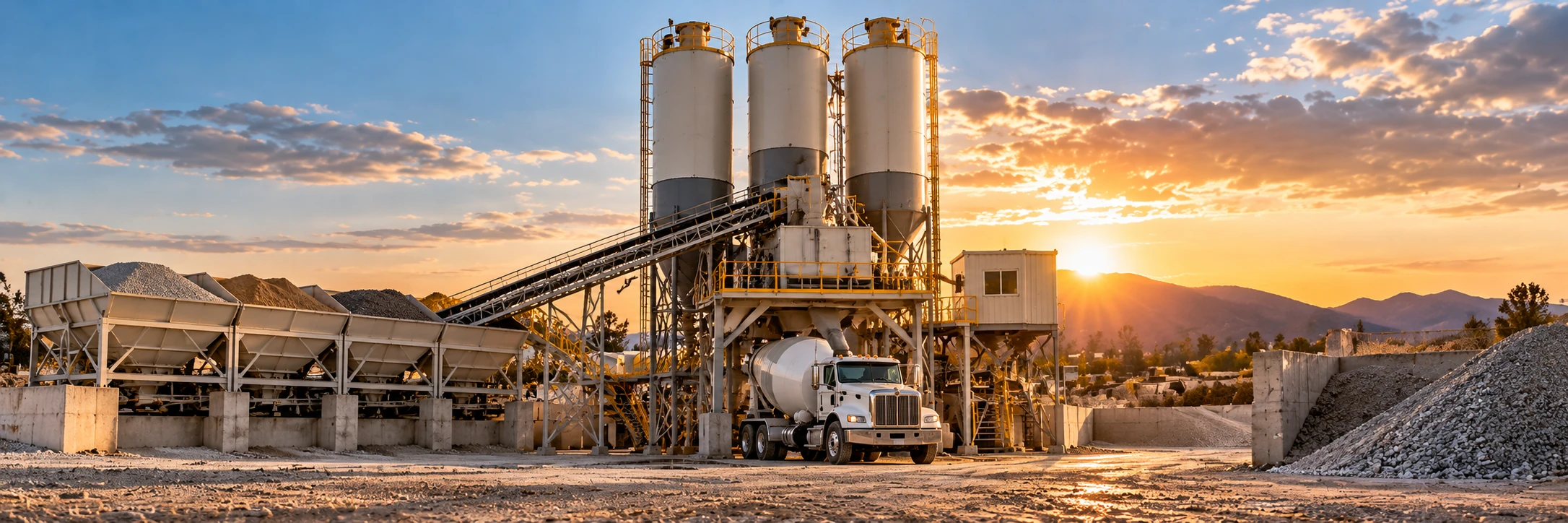
There is no useful single answer to “How much does a concrete batch plant cost?” Two plants capable of producing concrete may have radically different prices because the plant itself is only part of the project.
A realistic budget can include plant equipment + storage + controls + foundations + electrical + water + dust collection + freight + erection + permitting + commissioning.
Why manufacturers quote plants individually
Plant configuration changes scope dramatically: mobile or stationary, dry or wet batch, mixer type, dust collection, conveyors, silos, screw feeders and controls can all be substantial components.
1. Mobile vs. stationary architecture
Mobility adds transport-focused engineering; stationary plants may support larger permanent infrastructure. Neither is automatically cheaper in the way that matters.
2. Required production capacity
Higher sustained production can drive aggregate storage, silo capacity, scales, conveyors, mixers, truck staging and electrical demand.
3. Dry batch vs. central mix
A central mixer adds major equipment, structure, power, controls, maintenance and washout considerations.
4. Aggregate and cementitious storage
Each additional material compartment or silo can add structure, conveying, aeration, level indication, foundations and controls.
5. Controls and automation
Modern systems can manage recipes, material weighing, moisture corrections, ticketing, production records and diagnostics. On a used plant, determine whether the controls are usable, upgradeable, obsolete or missing.
6. Foundations and site work
Permanent structures may require engineered foundations, grading, drainage, paving, stockpile areas and truck circulation. Some mobile configurations reduce or eliminate portions of that work.
7. Electrical, utilities and environmental equipment
Budget for power, panels, wiring, water, compressor, plumbing, heating/chilling, lighting, dust collection and washout as applicable.
8. Freight and installation
A used plant may require dismantling, multiple freight loads, cranes, erection, wiring and recommissioning.
New vs. used batch plant
Used equipment may reduce acquisition cost but can add dismantling, structural repair, bearings, belts, load cells, controls work, foundation work, missing components and freight.
The BigEquipCo Batch Plant Cost Worksheet
| Cost area | Included? | Estimate separately? |
|---|---|---|
| Main plant | □ | □ |
| Aggregate storage | □ | □ |
| Cement silos | □ | □ |
| Conveyors / mixer | □ | □ |
| Controls | □ | □ |
| Dust collection | □ | □ |
| Electrical / water | □ | □ |
| Foundations / site work | □ | □ |
| Freight / erection | □ | □ |
| Permitting / commissioning | □ | □ |
The takeaway
The purchase price and production-ready cost are not the same number. Compare equipment + relocation + installation + infrastructure + repairs/upgrades.