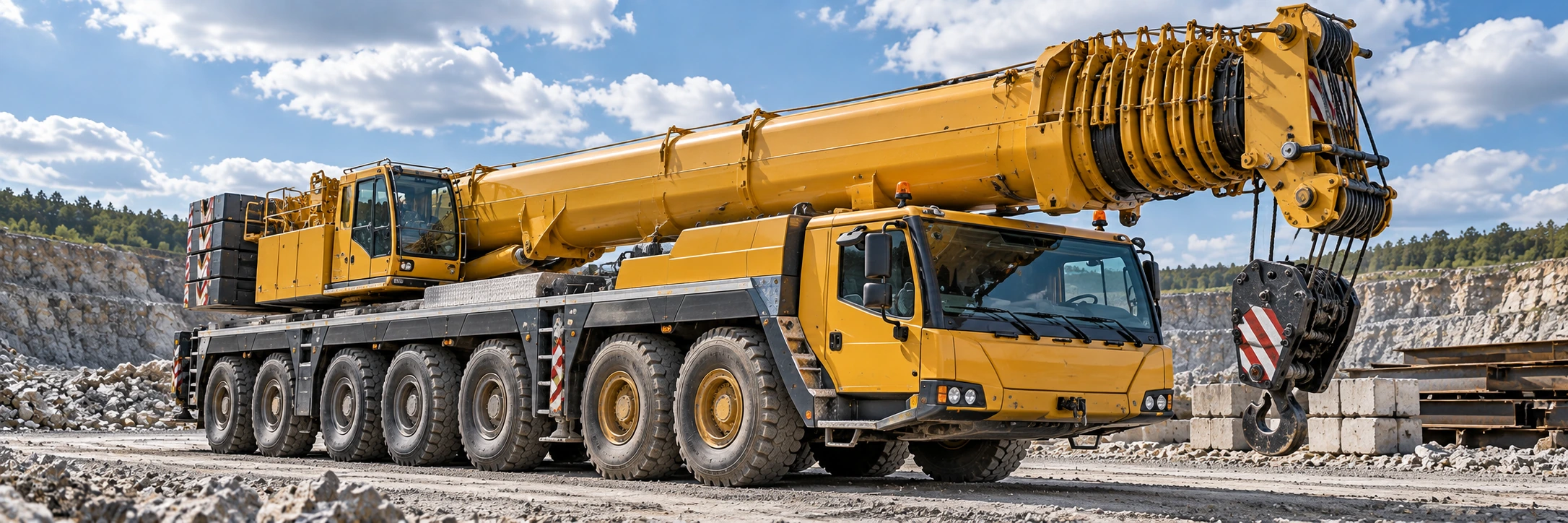
A used all-terrain crane combines two expensive machines in one: a road-capable multi-axle carrier and a high-capacity hydraulic crane. A strong engine and clean paint do not tell you whether the boom, outrigger system, suspension, steering, load-control electronics and carrier drivetrain have been maintained as one coordinated lifting system.
Current Grove all-terrain cranes illustrate that complexity. The machines combine highway mobility with multi-axle steering, hydropneumatic suspension, outriggers, telescopic booms and increasingly sophisticated crane-control and connectivity systems. A used-crane inspection should therefore cover both carrier condition and lifting-system condition before value is assigned.
1. Verify the exact crane configuration
Start with the model, serial number, year represented by the seller, indicated carrier mileage, upper hours and any separate engine hours. Record boom length, jib packages, counterweight inventory, hook blocks, outrigger equipment and installed technology. Compare the physical machine with available manufacturer documentation so missing counterweights, inserts, removable sensors or accessories are identified before the deal.
2. Inspect the boom section by section
Extend the boom through its operating range and inspect accessible sections for dents, scoring, cracked welds, damaged wear pads, hydraulic leakage and evidence of non-factory repair. Watch extension and retraction for hesitation or uneven movement. Inspect boom head sheaves, pins, rope guides and attachment points. A cosmetic touch-up is not a substitute for confirming structural condition.
3. Check outriggers, boxes and jacks
Deploy every outrigger individually and together. Look for bent beams, damaged pads, cracked welds, leaking cylinders, worn locking components and excessive movement. Verify controls at all available stations. If the crane has variable or asymmetrical outrigger-position technology, confirm that sensors and the crane-control system recognize the actual setup correctly.
4. Evaluate suspension, steering and axle systems
All-terrain carriers depend on complex suspension and steering systems to move a very heavy crane both on road and around jobsites. Inspect suspension cylinders, hoses, accumulators, axle housings, steering linkages and wheel-end areas for leakage, looseness and damage. Drive the crane through normal steering modes where practical and look for warning messages, abnormal tire scrub or inconsistent response.
5. Inspect tires as a set
Record tire size, brand, load rating, tread depth, age code and condition at every position. Mismatched or unevenly worn tires can create a large replacement expense and may also point to alignment, steering or suspension issues. Check sidewalls for cuts, weather cracking and impact damage.
6. Test carrier drivetrain and braking
Bring the carrier to operating temperature. Check starting, transmission behavior, transfer case operation, axle engagement, retarders and service brakes as equipped. Watch coolant and transmission temperatures during a meaningful road test. Review fault history when the system permits it rather than relying only on an empty dashboard at idle.
7. Operate the upper under controlled conditions
Test swing, boom raise/lower, telescope and hoist functions smoothly and repeatedly. Listen for abnormal pump noise and inspect cylinders, hoses, swivel areas and winches for leakage. Verify limiters, displays, cameras, alarms and rated-capacity or load-moment systems according to the machine's configuration. Any function that materially affects safe lifting should be demonstrated by qualified personnel.
8. Review inspection and service records
Ask for periodic inspection records, major repair invoices, wire-rope history, boom work, cylinder rebuilds, engine and transmission repairs, software or control-system service, and documentation for replaced structural components. Match important records to the crane serial number. A crane with complete records is easier to evaluate than one where major work is described only verbally.
Used all-terrain crane inspection scorecard
| Area | Strong | Investigate | Concern |
|---|---|---|---|
| Boom / attachments | □ | □ | □ |
| Outriggers / sensors | □ | □ | □ |
| Suspension / steering / axles | □ | □ | □ |
| Tires / brakes | □ | □ | □ |
| Upper hydraulics / hoists | □ | □ | □ |
| Controls / records | □ | □ | □ |
The takeaway
Do not buy an all-terrain crane by judging only the upper or only the carrier. The purchase makes sense when boom condition, outrigger integrity, carrier systems, controls, tires and documented maintenance all support the intended lifting work.
Related BigEquipCo guides: Used Crawler Crane Buying Guide, Used Rough Terrain Crane Buying Guide and Heavy Equipment Maintenance Records.