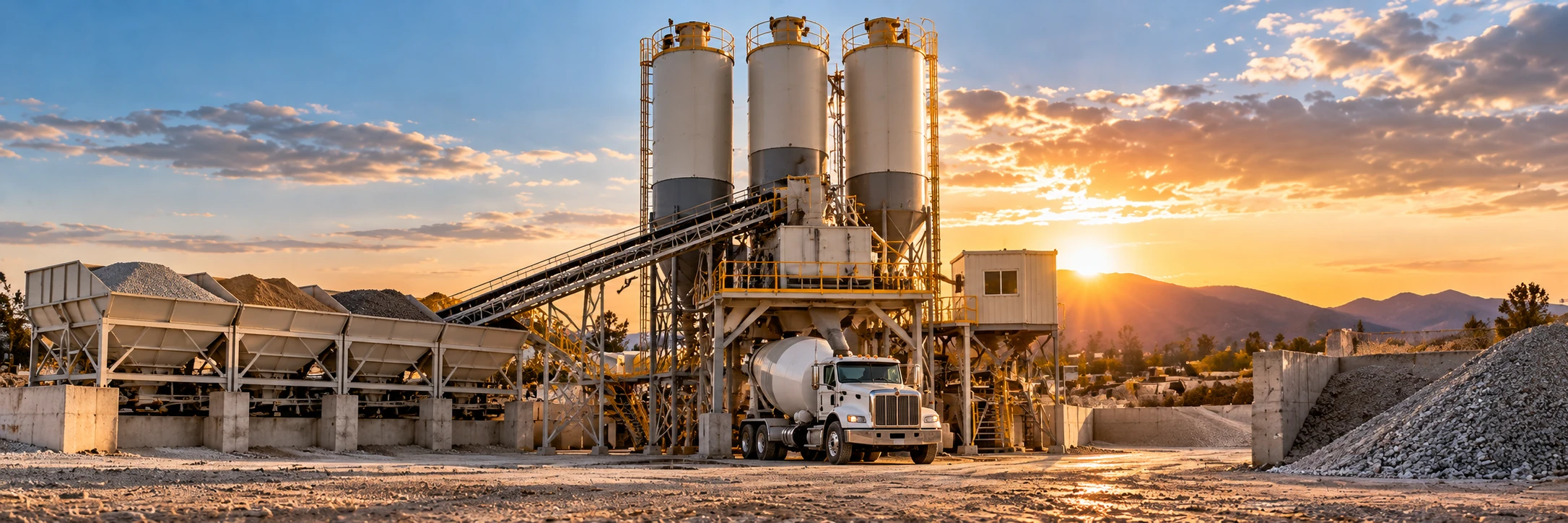
A used concrete batch plant is not one machine. It is a connected production system made of storage, weighing, conveying, controls, air, water, electrical equipment and structural steel. The purchase price can look attractive while relocation and recommissioning costs remain hidden.
Inspect the plant as both equipment and a future installation project.
1. Document exactly what is included
Build a component list before discussing value: aggregate bins, batcher, conveyors or skip, cement silos, screw feeders, scales, load cells, dust collectors, compressor, water system, admixture system, mixer if applicable, controls, electrical panels, platforms and stairs.
2. Inspect the structural steel
Look for corrosion, bent members, cracked welds, field modifications, missing bracing and damage around load-bearing connections. Pay special attention to areas exposed to cement buildup, wash water and trapped moisture.
3. Inspect aggregate bins, gates and feeders
Check bin walls, liners, gate operation, vibrators and feeder components. Material buildup can hide wear. Verify whether the bin configuration matches the number and volume of aggregates you plan to use.
4. Inspect conveyors or skip systems
For belts, review belting, splices, idlers, pulleys, drive, tracking and support structure. For skip systems, inspect rails, hoist drive, cable or chain, wheels, bucket and limit switches.
5. Verify scales and load cells
Concrete quality depends on accurate proportioning. Inspect weigh hoppers, load cells, junction boxes and mounting points. Ask when the system was last calibrated and whether replacement parts and technical support remain available.
6. Inspect silos and cement handling
Review silo shell condition, legs, cones, aeration, level indicators, pressure-relief components, screw conveyors and dust filtration. EPA identifies cement and pozzolan transfer as important particulate-emission points at concrete batch operations.
7. Evaluate the control system
Determine whether the batching software, PLC, I/O hardware, ticketing and moisture-correction systems are functional and supportable. An obsolete control system may still run today but create a major recommissioning problem after relocation.
8. Inspect air, water and admixture systems
Check compressor capacity, air dryer, valves, cylinders, plumbing, pumps, meters and tanks. Trace every system needed to operate gates and material flow.
9. Central mixer inspection
If the plant is central mix, inspect mixer liners, paddles or blades, shafts, seals, gearbox, drive and discharge gate. NRMCA notes that central-mix plants add a stationary mixer before concrete enters the delivery unit.
10. Plan dismantling, freight and recommissioning
Ask who will label wiring, document the plant, dismantle it, load it, transport it and erect it. Missing structural members, undocumented wiring and cut cables can erase much of the savings of a used plant.
Used batch plant scorecard
| System | Strong | Investigate | Concern |
|---|---|---|---|
| Structure | □ | □ | □ |
| Aggregate handling | □ | □ | □ |
| Scales / load cells | □ | □ | □ |
| Silos / screws | □ | □ | □ |
| Controls / electrical | □ | □ | □ |
| Dust collection | □ | □ | □ |
| Air / water / admixtures | □ | □ | □ |
| Dismantling scope | □ | □ | □ |
The takeaway
Value the plant at production-ready cost, not auction or asking price. Add dismantling, freight, foundations, erection, electrical work, controls upgrades, repairs, calibration and commissioning before comparing it with another plant.
Related BigEquipCo guides: Concrete Batch Plant Cost and Portable vs. Stationary Batch Plants.