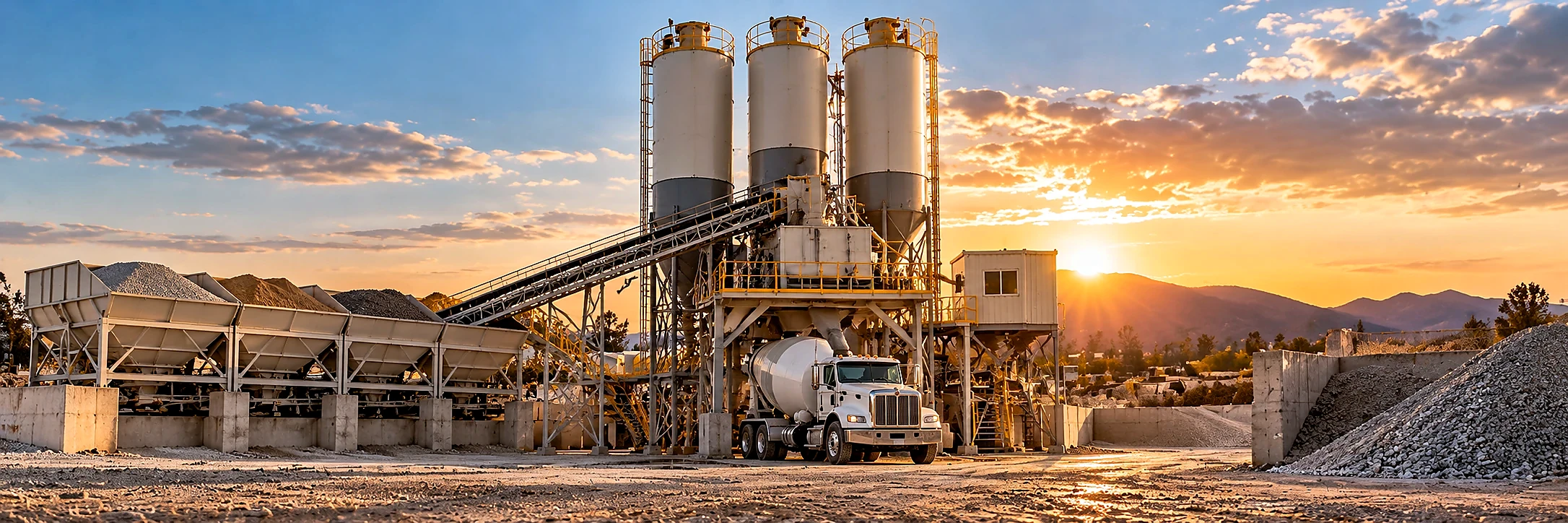
Cement handling is one of the least visible but most important systems in a concrete batch plant. Dry cement has to move from delivery into storage, from the silo into a weighing system and then into the mixer or truck without uncontrolled loss of material. The equipment that does that job usually includes pneumatic fill piping, silos, level devices, dust collection, screw feeders and a cement weigh batcher.
EPA’s concrete-batching process description shows cement and supplementary materials moving through enclosed storage and conveying systems before weighing and mixing. Understanding that flow helps buyers inspect a plant as a system instead of evaluating each silo or screw separately.
1. Start with the material-flow path
Trace the route from the bulk tanker connection to the silo, through the discharge cone and screw feeder, into the cement batcher and finally to the mixer or truck. Confirm every valve, vent, sensor, motor and transition needed for that path is present.
2. Inspect silo structure and supports
Examine the shell, cone, legs, bracing, access ladder, platforms and connection points for corrosion, dents, cracks and field modifications. Look closely where moisture can collect and where the silo connects to foundations or portable plant structure.
3. Check pneumatic fill components
Inspect fill pipes, couplings, elbows and valves for wear and secure mounting. Ask how operators monitor filling and prevent overfill. Verify that pressure-relief and venting components are present and maintained according to the equipment manufacturer.
4. Inspect dust collection and silo venting
EPA identifies particulate emissions from cement and pozzolan transfer as a key batch-plant concern. Inspect filter media, housings, cleaning systems, pressure indicators and duct connections. A dust collector that is plugged, damaged or incorrectly sized can create both operational and housekeeping problems.
5. Inspect screw feeders from inlet to discharge
Check the screw casing, flighting, hanger or end bearings, gearbox, motor, seals and flexible connections. Listen for contact, bearing noise or vibration during operation. Verify that the screw size and drive match the plant’s required cement rate.
6. Evaluate gates, aeration and flow aids
Cement can bridge or rat-hole inside storage. Inspect aeration pads, vibrators, valves and controls used to promote flow. Watch for excessive patching around the cone or discharge area, which can signal past plugging or structural wear.
7. Verify the cement weigh batcher
Inspect the weigh hopper, load cells, junction boxes, flex connections and discharge gate. Ask for calibration history and confirm the control system receives stable weight readings. Mechanical condition alone is not enough if the weighing system cannot repeat accurately.
8. Review guarding and service access
OSHA’s conveyor rules address guarding, warning and lockout considerations, including screw conveyors. Inspect guards, covers, access doors and safe service clearances. Any used plant should be evaluated against current manufacturer instructions and the safety requirements that apply to the new site.
Cement-handling inspection checklist
| System | What to verify |
|---|---|
| Silo | Structure, cone, supports, level devices, venting |
| Pneumatic fill | Piping, couplings, valves, pressure relief |
| Dust collection | Filters, cleaning system, housing, connections |
| Screw feeder | Flighting, casing, bearings, gearbox, motor |
| Flow aids | Aeration, vibrators, valves and controls |
| Weigh batcher | Load cells, hopper, flexes, calibration history |
The takeaway
A concrete plant’s cement system should be evaluated as one continuous material path. Storage capacity is only useful when the silo can fill safely, discharge consistently, convey cement reliably and weigh it accurately.
Related BigEquipCo guides: Used Concrete Batch Plant Buying Guide, Concrete Batch Plant Cost and Skip Hoist vs. Belt Conveyor Batch Plant.