A machine's product identification number or serial number ties the physical equipment to configuration, service records, parts information and transaction documents. Buyers should verify that identity before relying on model year, hour meter, warranty claims or seller-provided history.
1. Understand PIN versus serial number terminology
Terminology varies by manufacturer and machine type. ISO 10261:2021 defines a product identification numbering system for earth-moving machinery and notes that the PIN system can also be used on other off-road work machines. Manufacturers may still use serial-number terminology in listings, service systems and parts catalogs.
2. Find the physical identification plate
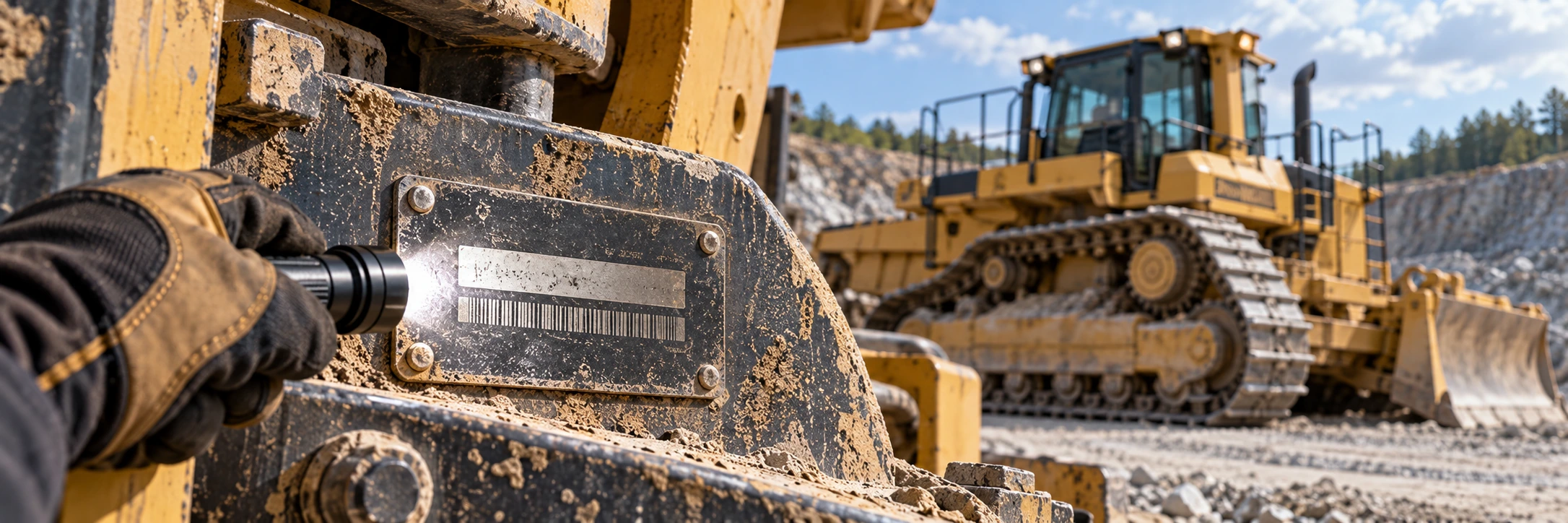
Locate the machine's primary identification plate or stamped location using the operator manual or manufacturer guidance. Photograph the full plate and surrounding mounting area. Record every character exactly rather than relying only on a listing description or handwritten number.
3. Compare the identifier across the transaction
The number on the machine should match the sales invoice, purchase agreement, inspection report, service records and any warranty or dealer documentation that claims to describe that unit. Resolve any mismatch before treating the record as evidence for the machine in front of you.
4. Separate machine identity from component identity
Engines, transmissions, attachments and other components can have their own serial numbers. ISO 10261 distinguishes the machine PIN from components and attachments. Record major component serials when relevant, but do not substitute an engine or attachment number for the machine's primary identity.
5. Use the PIN to verify configuration
Ask an authorized dealer or manufacturer support channel to confirm model configuration, factory options and build information when available. This is especially useful when machines have been repainted, rebadged, rebuilt or modified.
6. Reconcile service history
Service records are most useful when tied to the same machine identifier and include dates and meter readings. Caterpillar's Certified Used process reviews machine configuration and service/repair history as part of inspection. A buyer can apply the same discipline outside a certified program.
7. Inspect the plate and stamped area for anomalies
Look for damage, missing fasteners, inconsistent rivets or screws, grinding, fresh paint over a stamped area or a plate that appears inconsistent with the age and condition of the machine. An anomaly does not establish a cause; it means stronger documentation is needed.
8. Verify seller documentation separately
A valid machine identifier confirms identity, not the seller's right to transfer the machine. Verify transaction documents using the due-diligence process required by your business, lender, insurer or jurisdiction.
Buyer identity checklist
- Primary PIN or serial number photographed on the machine.
- Identifier matches invoice and purchase agreement.
- Service records reference the same machine.
- Major component serials recorded when relevant.
- Manufacturer/dealer configuration checked when possible.
- No unexplained plate or stamped-area anomaly.
The takeaway
Identity verification is basic but critical due diligence. Record the physical machine identifier first, then make every important claim about configuration, service history and coverage tie back to that exact unit.
Related BigEquipCo guides: Heavy Equipment Pre-Purchase Inspection, Heavy Equipment Maintenance Records and How Many Hours Is Too Many on Used Heavy Equipment?.