Every equipment dealer eventually faces the same SEO question: what should happen to a machine-detail URL after the unit sells? There is no single answer for every listing. The right response depends on whether the page still helps buyers, whether there is a close replacement, and whether the old URL has useful search or referral history. The worst approach is to let sold inventory drift into confusing, empty or misleading pages.
1. Decide whether the sold page still has buyer value
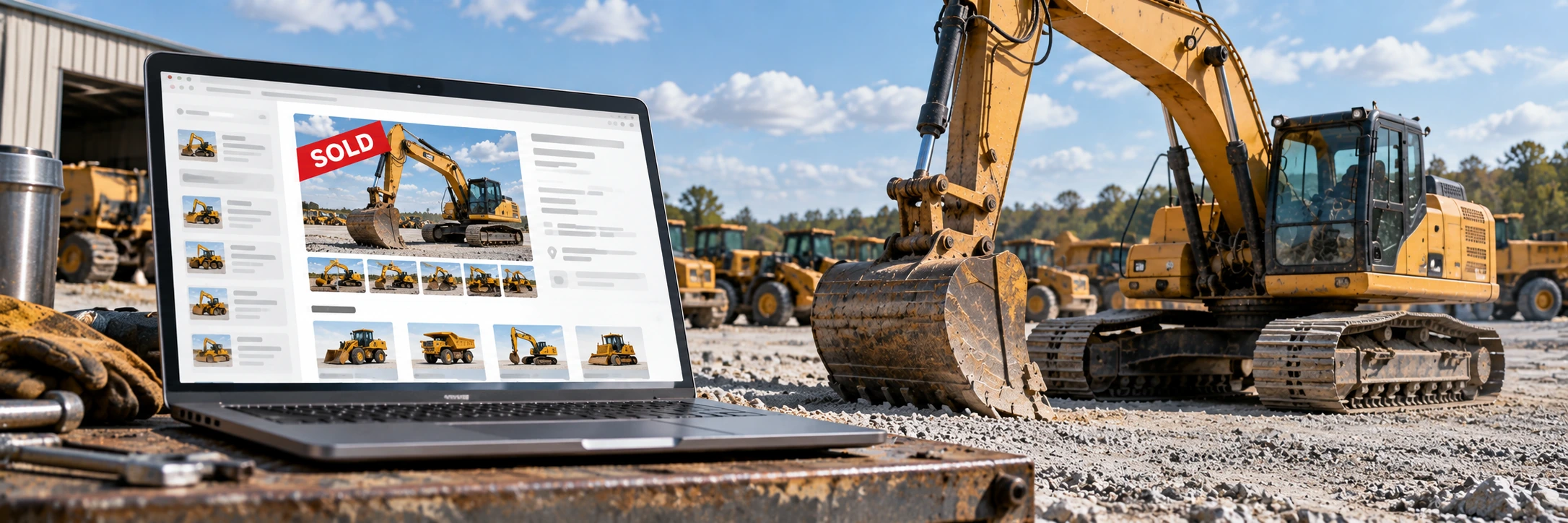
A sold listing can remain useful when it clearly says the machine is no longer available and gives buyers meaningful next steps such as similar inventory, the same model family or dealer contact information. If the page is kept, it should never look like active inventory.
2. Keep the page when the content remains genuinely useful
Keeping a sold page can make sense when it has unique machine information, external links or continuing search demand. Preserve useful content, change availability visibly, remove it from active inventory results and link to current alternatives.
3. Redirect only to a close replacement
Google recommends server-side permanent redirects when a URL has moved to a meaningful replacement. Redirecting every sold unit to the homepage or an unrelated category creates a poor user experience. Use a redirect when the destination genuinely satisfies substantially the same buyer intent.
4. A real 404 or 410 can be correct
If a sold machine has no useful replacement and the old page no longer provides value, removing it and returning an appropriate not-found response is legitimate. Google's documentation explains that 4xx responses prevent the URL content from being processed for indexing. A 404 is not inherently a site-quality failure when the resource is truly gone.
5. Avoid soft 404 behavior
A blank template or generic sold message that returns a normal success code but provides no useful content can become a soft-404-style experience. Make the HTTP response and visible page match the resource's real state.
6. Update availability and structured data together
If a page remains live, visible availability and any Product or Offer structured data should tell the same story. Do not leave a sold machine marked as available because structured data is generated from stale inventory fields.
7. Remove sold units from active merchandising
Sold equipment should not remain mixed into active search results, dealer inventory feeds or "for sale" category grids unless the interface clearly separates sold history. Internal links should prioritize inventory buyers can actually purchase.
8. Clean up XML sitemaps
Google recommends putting canonical URLs you want in search into sitemaps. If a sold URL redirects or disappears, it should not continue appearing as active inventory in the sitemap. If a useful sold page intentionally remains indexable, handle it consistently with that policy.
9. Use a repeatable lifecycle rule
| Situation | Likely action |
|---|---|
| Useful sold page with continuing buyer value | Keep it, mark sold clearly and offer relevant alternatives |
| True close replacement exists | Consider a permanent redirect |
| No useful content or replacement | Return 404 or 410 and remove from active sitemap |
| Page remains live | Update availability, links and structured data |
10. Review high-value URLs before changing them
Check Search Console, analytics, backlinks and referral traffic before deleting older pages. A URL with real visibility may deserve a useful retained page or carefully selected replacement.
The takeaway
Sold inventory needs an intentional URL lifecycle. Keep a page when it still helps buyers, redirect only when a relevant replacement truly exists, and remove pages that no longer serve a purpose.
Related BigEquipCo guides: Equipment Inventory Pages SEO, Inventory SEO: Canonicals & Filters and Product Structured Data for Dealers.