Listing fees are only one part of the cost
Selling heavy equipment online has become a necessary part of running a dealership. The problem is that simply adding another marketplace does not automatically mean better results.
Dealers can end up paying for multiple platforms while also spending staff time uploading photos, rewriting descriptions, changing prices, removing sold machines and answering inquiries across several separate systems. That makes the real cost of a marketplace much bigger than its monthly invoice.
A dealer comparing marketplaces should look beyond the advertised price and calculate the complete operational cost of participating.
1. The marketplace fee
This is the obvious expense: monthly subscriptions, listing packages, advertising fees, commissions or other charges. But it is only the beginning.
2. Inventory-management time
If your sales team has to enter the same excavator into your website, one marketplace, another marketplace and several specialty sites, you are paying for that labor every time.
Then someone has to update the price everywhere. When the machine sells, someone has to remove it everywhere. The larger the dealership becomes, the more expensive duplicate inventory management becomes.
3. Missed exposure
A dealer may have the right machine at the right price but still miss the buyer because the equipment was not present where that buyer searched.
This is why inventory distribution and marketplace syndication matter. The goal is to increase the number of relevant places where a machine can be discovered without increasing administrative work at the same rate.
4. The buyer relationship
Dealers should also ask what happens after someone finds a listing. Does the buyer contact your dealership directly? Can your team track the inquiry? Does the platform strengthen your dealership's own brand? Or are you simply renting access to someone else's audience?
The better question: how much work does each marketplace create?
Adding another advertising channel can make sense if it creates incremental exposure. But adding five marketplaces should not require maintaining five inventories.
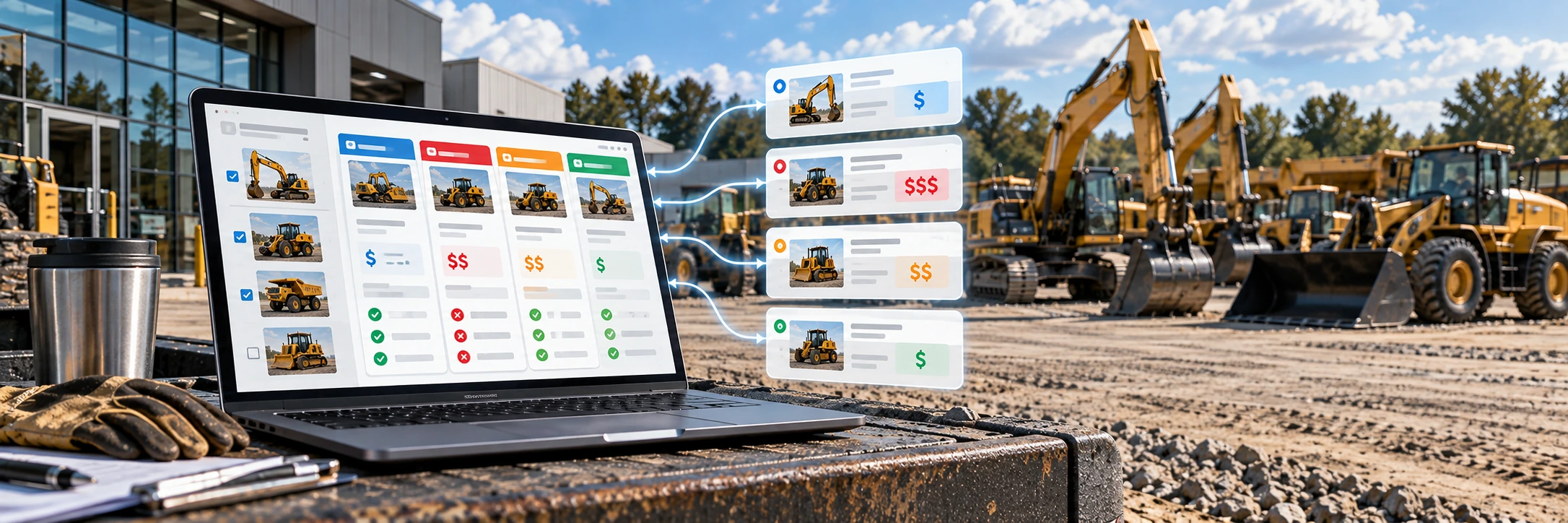
The more scalable model is simple: one inventory, multiple buyer channels.
Your team maintains the machine once. The inventory system handles the distribution. When the price changes, change it once. When the machine sells, mark it sold once.
BigEquipCo is being built around that model
BigEquipCo's dealer platform is designed around a central Command Center where inventory can be managed once and distributed through the BigEquipCo marketplace ecosystem.
That ecosystem is being built to include specialized equipment properties such as YellowEquipCo, BigTruckCo and BigConcreteCo.
One Inventory. More Exposure. More Buyers.
A dealer should not have to create another administrative job simply to advertise inventory in another place.
BigEquipCo is currently selecting Launch Partners
Ahead of launch, BigEquipCo is working with a limited group of equipment dealers as Launch Partners. Launch Partners can begin onboarding before launch and receive 50% off membership for the first six months.
If your dealership regularly sells heavy equipment and wants to expand online exposure without maintaining another disconnected inventory system, explore the Partnership program.