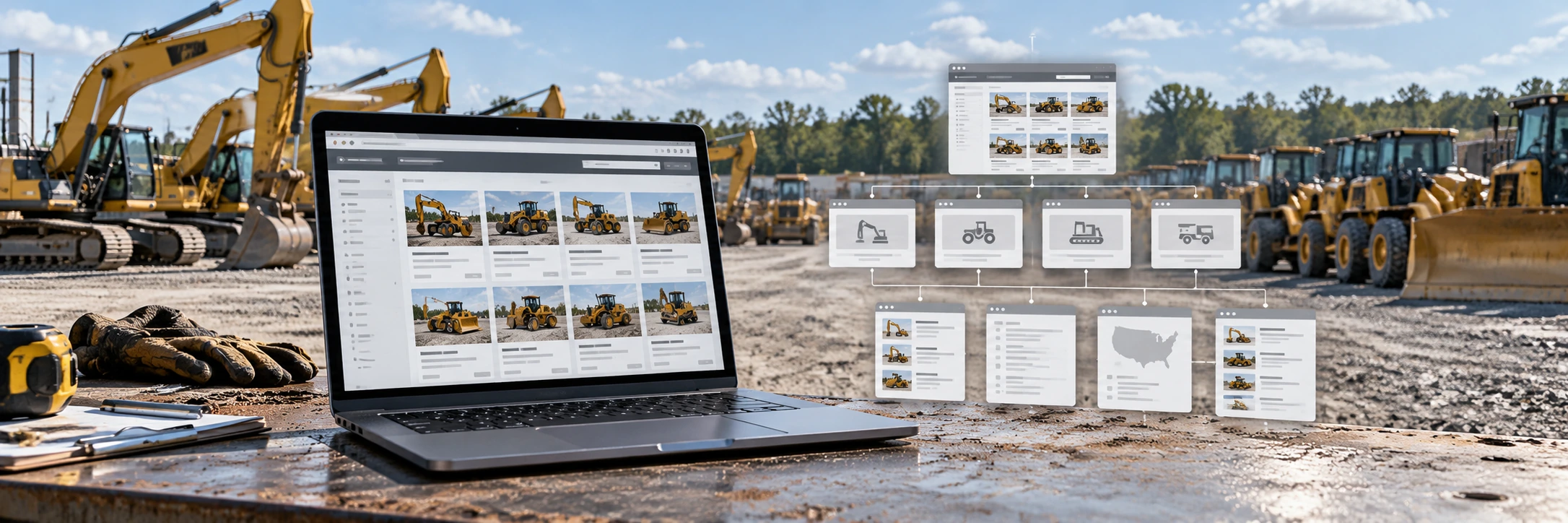
An equipment inventory sitemap is a current list of canonical listing URLs a dealer wants search engines to discover. Build it from active inventory, exclude search filters and noindex pages, and update it when a listing changes meaningfully. A sitemap supports discovery; it does not guarantee crawling or indexing.
How should a dealer sitemap handle equipment listings?
Include preferred, indexable equipment URLs and keep the file synchronized with the same inventory record buyers see on the site.
1. Treat the sitemap as a discovery file, not a ranking trick
Google describes a sitemap as a way to tell search engines about URLs on a site. Submitting one is a hint, not a guarantee that every URL will be crawled or indexed. The practical goal for an equipment dealer is simple: make it easier for Google to discover the inventory pages that actually matter.
2. Include only canonical, indexable inventory URLs
Your inventory sitemap should contain the preferred URL for each live machine listing. Avoid filling it with filtered search URLs, duplicate parameter combinations, internal search results or pages that intentionally point to another canonical URL. The sitemap should reinforce the same clean URL set your site architecture and canonical tags are already presenting.
3. Generate the inventory sitemap from the source of truth
For an active dealership, hand-maintained sitemaps become stale quickly. Generate the file from the same inventory system that powers the website so new listings can appear automatically and sold or removed listings can be handled according to the site's sold-inventory policy. This reduces the risk of Google receiving a sitemap full of URLs that no longer represent available inventory.
4. Use lastmod only when the listing changed meaningfully
Google says the lastmod value can help it schedule crawling when the date consistently reflects reality. For equipment listings, meaningful changes can include updated primary content, specifications, price, structured data, images or important internal links. Do not rewrite every listing's date simply because a footer, template or unrelated site element changed.
5. Keep sold-equipment handling consistent
If a sold machine page remains useful and indexable, it can stay in the sitemap while that page continues to serve a legitimate search purpose. If the page is redirected, removed or intentionally noindexed under your sold-inventory strategy, the sitemap should stop presenting the old URL as a current indexable destination. Sitemap behavior should follow the page decision, not contradict it.
6. Split large sitemaps when inventory grows
Google's sitemap documentation sets size limits and supports sitemap index files for sites that need multiple sitemaps. Dealers with large inventory, multiple locations or separate content types can keep equipment URLs in a dedicated inventory sitemap and use a sitemap index to organize the rest of the site. A clean structure also makes troubleshooting easier in Search Console.
7. Make crawlable internal links do the heavy lifting too
A sitemap should support, not replace, normal site navigation. Google discovers URLs through crawlable links as well as sitemaps. Category pages, manufacturer pages, dealer-location pages and related-equipment modules should use standard links that lead buyers and crawlers to active inventory. Important machines should not exist only inside a JavaScript interaction that never exposes a crawlable URL.
8. Monitor the sitemap in Search Console
Submit the sitemap or sitemap index in Google Search Console and review processing errors. When fresh listings are not being discovered, check whether the URL is actually present, crawlable, canonical, internally linked and returning a normal successful response. The sitemap is one piece of the discovery chain, not a substitute for page quality or technical accessibility.
Inventory sitemap checklist
| Check | What good looks like |
|---|---|
| URL set | Only preferred, indexable inventory URLs are included |
| Automation | The sitemap updates from the live inventory source |
| lastmod | Dates change only after meaningful listing changes |
| Sold units | Sitemap behavior matches the sold-page SEO decision |
| Scale | Large URL sets are split and organized with a sitemap index |
| Discovery | Listings are also reachable through crawlable internal links |
| Monitoring | Search Console errors and discovery problems are reviewed |
The takeaway
For an equipment dealer, sitemap SEO is mostly about accuracy. Give Google a trustworthy list of the inventory URLs you actually want indexed, update meaningful modification dates honestly and keep the sitemap synchronized with the same inventory system buyers see on the site.
Related BigEquipCo guides: Equipment Inventory Pages, Inventory SEO: Canonicals, Filters and Faceted Navigation and Sold Equipment Pages & SEO.
Validate the sitemap as inventory changes
Check that every included URL returns a successful page and declares the preferred canonical URL. Remove listings that are sold, deleted, redirected or marked noindex. Confirm that parameterized search results and duplicate filter combinations are not being submitted as separate pages. Use a meaningful last-modified date that reflects a material listing change; changing the sitemap timestamp alone does not make a page more useful. After publishing the sitemap, inspect Search Console for fetch errors and sampled indexed URLs, then correct the underlying page or route before resubmitting.